Basics
Unicode and Glyphs Explained in Plain Language
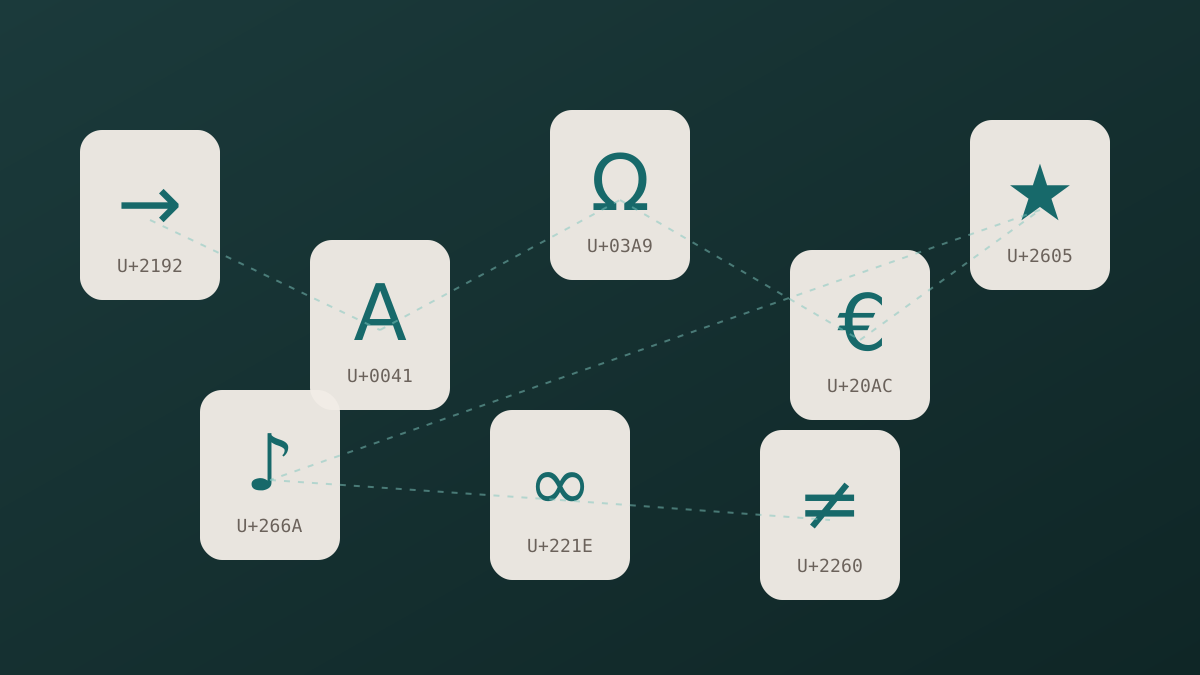
How a number in the Unicode standard turns into a visible arrow, star or letter on your screen.
Read articleNine practical articles about Unicode symbols: how they work, how to type them on each device, how to use them well in writing and code, and what to do when one refuses to display.
How a number in the Unicode standard turns into a visible arrow, star or letter on your screen.
Read articleBuilt-in tricks for special characters on phones, plus a faster route when the system keyboard runs out of options.
Read articleThe built-in character tools on Windows and macOS, and how they compare with a browser based board.
Read articleWhich arrows and operators exist, what each one means, and which look-alikes to avoid.
Read articleSmall touches that make a profile easier to scan, without hurting readability or accessibility.
Read articleDashes, quotation marks and currency signs that give documents a cleaner, more careful appearance.
Read articleLines, boxes and blocks that give plain text structure in notes, READMEs and chat messages.
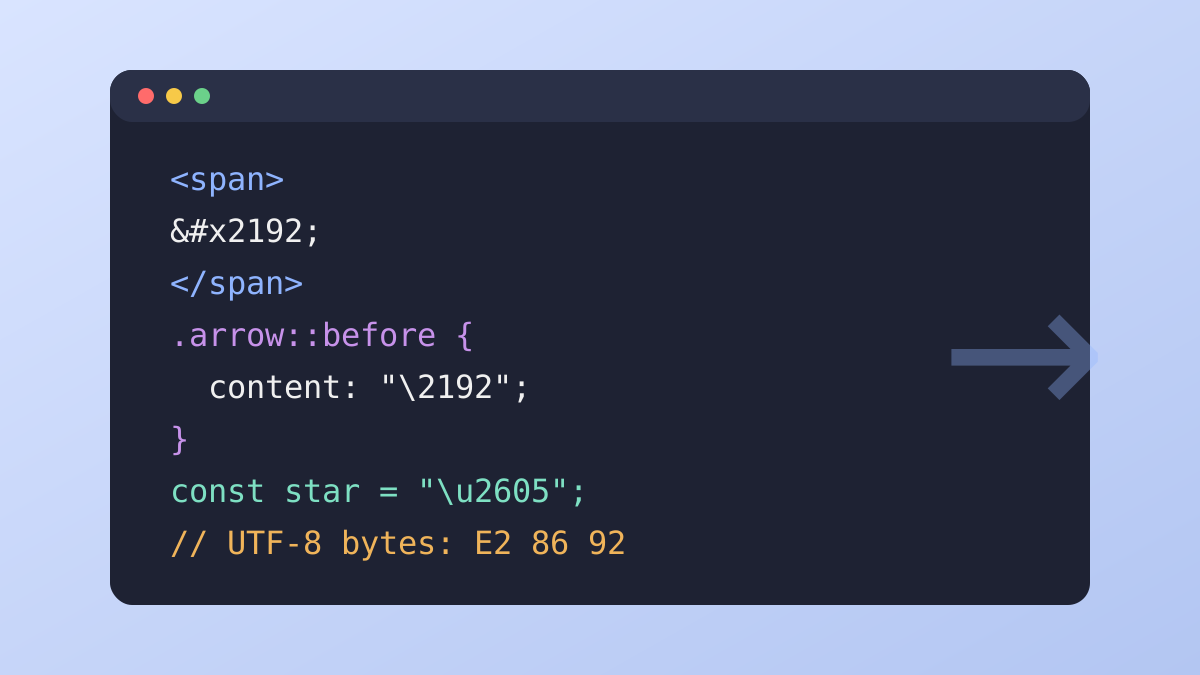
Read articleHow to write any character as an HTML entity, a CSS escape or a JavaScript escape sequence.
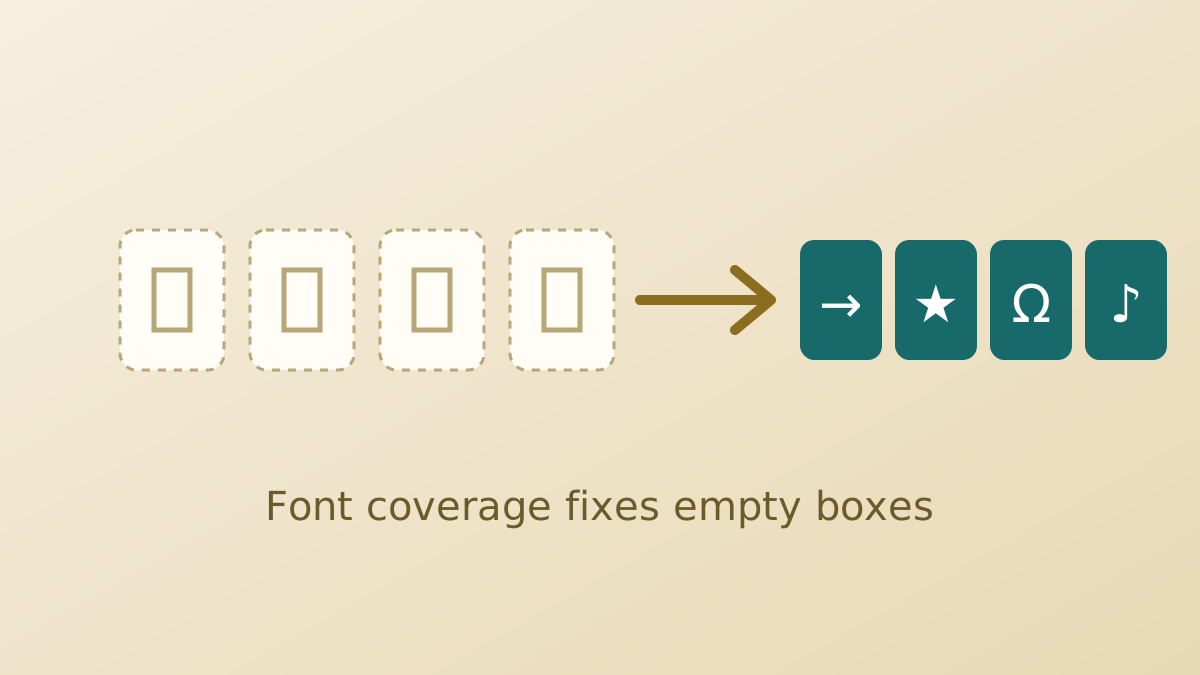
Read articleEmpty squares and question marks usually come from fonts or encodings. Here is how to track down the cause.
Read article